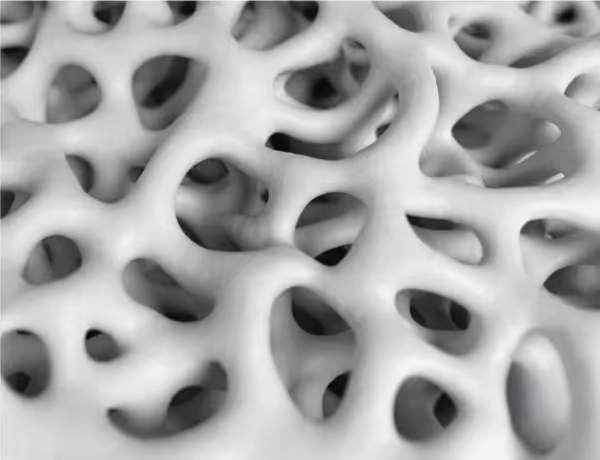

Upsalite® is a patented mesoporous magnesium carbonate — the world's first porous form of the mineral — discovered at Uppsala University in Sweden. A network of tiny internal pores gives a single gram 300–500 m² of internal surface area, letting it absorb oil and moisture at the same time and scatter light for a soft-focus finish. Here's the science in brief — and where to go deeper.

Upsalite® was created in 2012 by researchers at Uppsala University — a stable, porous magnesium carbonate the scientific community had believed for over a century couldn't be made. Today it is patented, award-winning, and produced by Disruptive Materials for use in cosmetics, personal care and sports. As Professor Maria Strømme, who led the discovery, described it, the team had synthesised a material "previously claimed impossible to make".
Upsalite®'s performance comes from its structure.
Comparison table, the electron-microscope images and the full science are available on Upsalite.com →
Common questions such as formulation compatibility, regulatory status, sampling and more are answered in the Upsalite® FAQ →